
RECENT POSTS
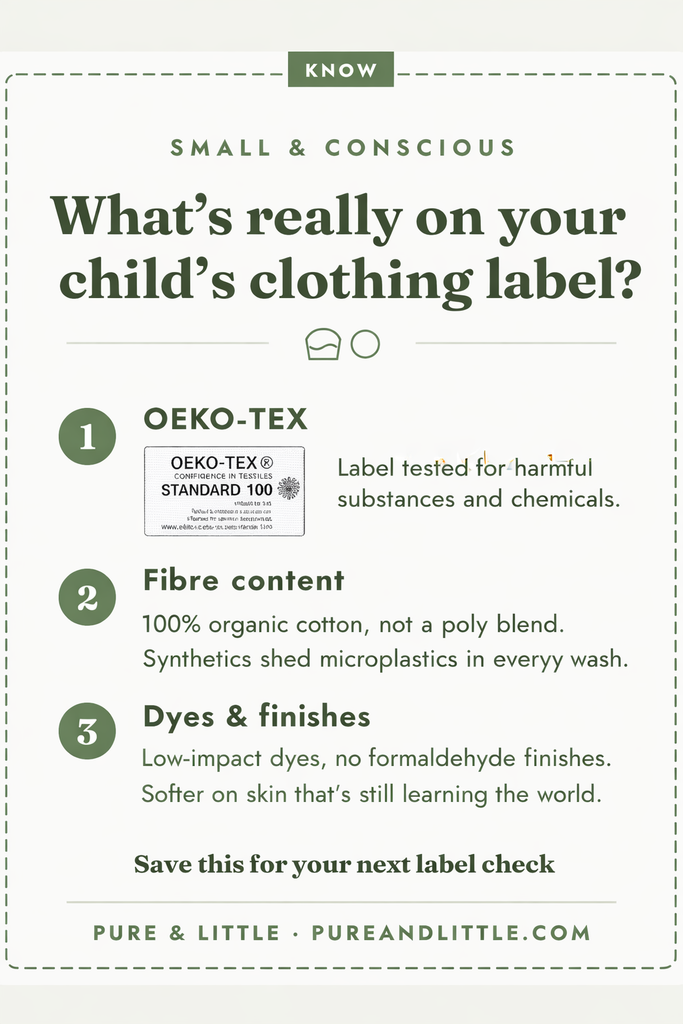

Why Organic Cotton Matters For Your Child's Skin

As parents, we spend hours researching car seats and sleep schedules, but how often do we think about what's touching our children's skin for sixteen hours a day?
Your child's clothes are the first thing they feel every single morning. And if those clothes are made from conventional cotton, they may be carrying a chemical legacy you'd never choose to put on your baby's body.
At Pure & Little, everything we make starts with one question: would I put this on my own child?
Organic cotton is our non-negotiable , and here's exactly why.
The Problem with Conventional Cotton
Cotton is one of the most pesticide-heavy crops in the world. Conventional cotton farming uses roughly 6% of the world's pesticides and 16% of all insecticides, despite occupying only 2.4%
of global farmland. Those chemicals don't simply disappear during manufacturing.

Synthetic dyes, formaldehyde finishes, optical brighteners, and residual pesticides can all linger in the finished fabric. For adults with thicker skin, the exposure is manageable. But children are a different story entirely.

Children's Skin Is Not Like Ours
A baby's skin is 20–30% thinner than adult skin. It absorbs substances more readily, has a less developed barrier function, and is far more reactive to irritants. The skin of young children is still developing its microbiome, the delicate ecosystem of bacteria that protects against against inflammation, infection, and allergic response.

Eczema, contact dermatitis, skin rashes, and sensitivities are at an all-time high in children.
While the causes are complex, dermatologists increasingly point to environmental triggers, including synthetic fabrics and chemical residues in clothing, as significant contributing factors.
What Makes Organic Cotton Different?
Organic cotton is grown without synthetic pesticides, herbicides, or genetically modified seeds.
The farming process relies on natural methods to maintain soil health and protect surrounding ecosystems.

The GOTS Certification, What to Look For
Not all "organic" claims are equal. The Global Organic Textile Standard (GOTS) is the gold.
standard for organic cotton clothing. A GOTS certification means the organic credentials have been verified at every stage , from the cotton field through to the finished garment, including the dyes, processing chemicals, and working conditions in the factories.
When you see GOTS on a label, you can trust what you're buying.
At Pure & Little, we only work with suppliers who meet rigorous organic and ethical standards, because there's no point in caring about what touches your child's skin if we haven't cared about every step that got it there.

Choosing organic cotton for your child is also a vote for the kind of world you want them to grow up in. Conventional cotton farming depletes soil, pollutes waterways, and exposes farmworkers to dangerous levels of pesticides. Organic farming does the opposite, it builds healthy soil, protects local ecosystems, and creates safer working conditions. When your child wears Pure & Little, they're wearing a garment that didn't cost the earth to make. That's something worth teaching them about, and something worth wearing proudly.
A Simple Switch with a Big Impact
You don't need to overhaul your child's entire wardrobe overnight. Start with the pieces that spend the most time against their skin, bodysuits, sleepwear, and everyday basics. These are the items where the quality of the fabric matters most.
Your child's skin is doing an extraordinary job, growing, adapting, learning to protect itself. Give it the best possible start by choosing clothing that works with it, not against it.

Related post
08
Jul
21
Nov